Ground Combat Element 2040

PP&O Logo
United States Marine Corps
July 2026


Vision

     The Marine Corps faces a future defined by rapid technological change and the re-emergence of peer-level adversaries. The security environment of 2040 will demand a Ground Combat Element (GCE) that is not only technologically advanced but also physically, mentally, and morally prepared for the complexities of the modern battlefield. This document, the Ground Combat Element 2040, provides the essential vision and framework to guide our transformation. It is our roadmap for building a force that can deter conflict, and should deterrence fail, defeat any adversary in any clime and place.

     Our central imperative is to cultivate a GCE that is fully enabled by cutting-edge technology but remains fundamentally human-centric. While we will aggressively pursue innovations in artificial intelligence, robotics, and multi-domain fires, we will never lose sight of the fact that the individual Marine is our most critical asset. The courage, adaptability, and unwavering will to win of our warfighters are the true source of our combat power. The concepts outlined in this document are designed to empower our Marines, making them more lethal, resilient, and decisive. This is not merely a plan for modernization; it is a commitment to ensuring that our Corps remains the nation’s premier force in readiness, prepared to win the fights of the future.

Jay M. Bargeron
Lieutenant General, U.S. Marine Corps
Deputy Commandant, Plans, Policies, and Operations

Forward

     As the Commandant notes in First to Fight, “Between now and 2035, the Marine Corps will operate in increasingly complex and dynamic environments defined by persistent competition and rapid technological advancements.” I applaud the leaders across the Marine Corps who contributed, engaged and debated, and thoughtfully considered how to envision a path to modernization and innovation for the Ground Combat Element (GCE), especially the Plans, Policy, and Operations (PP&O) team for this worthy effort. I agree wholeheartedly the core of the future force must always be fundamentally human-centric, grounded in the qualities we seek and develop in individual Marines. This Ground Combat Element 2040 document represents important progress in how the service is enhancing the process of Force Design.

     I commit the resources of Combat Development and Integration (CD&I) and the Portfolio Acquisition Executive Marine Corps (PAE MC) to working collaboratively with PP&O to realize the objective of developing “GCE formations capable of dominating peer-level ground combat through 2040.”

     As this document notes, there are future uncertainties the Marine Corps will face; however, with discipline and proactive force design and development, rapid learning and wargaming, experimentation, and mission engineering in live, virtual, and constructive environments we can buy down risk, hedge for success, and invest in capabilities to ensure maximum flexibility and deliver decisive combined arms combat power.

     I charge all leaders who will drive this innovation forward to recognize the empowered future 2040 Marine envisioned in this document and realize we will best serve future Marines by being willing to divest from legacy platforms when their value wanes, and to continuously evolve our critical capabilities. Just as we emphasize the historic contributions our combined arms approach has yielded, we must also champion the adaptability of our Marine Corps and the willingness to make ground-breaking changes to sustain our prowess in ground combat and the multi-domain operations which will characterize future battlefields. Above all, as we emphasize accelerating the processes of innovation, I charge leaders to pull this future vision closer. This document is informed by today’s and tomorrow’s practical challenges, its success will be delivered when we capitalize on accelerating technological trends and bring the future GCE into being.

Eric E. Austin
Lieutenant General, U.S. Marine Corps
Deputy Commandant, Combat Development and Integration

Executive Summary
Vision and Strategic Imperative
1. Purpose and Strategic Context
The Ground Combat Element (GCE) 2040 FY26 document provides the foundational framework for the U.S. Marine Corps to develop, prioritize, and balance investments shaping its GCE through 2040. It serves as a critical benchmark for ensuring the GCE remains a lethal and adaptable force. The concept acknowledges profound future uncertainty but understands that the core of the future force remains fundamentally human-centric, grounded in the willpower, discipline, and adaptability of the individual Marine. While focused on technological modernization, the framework asserts that to meet the challenges of a complex battlefield and the prospect of a peer adversary, the GCE must be designed for maximum mission flexibility and decisive combat power, all of which originates from the quality, training, and ethos of its warfighters.
2. The Evolving Character of War
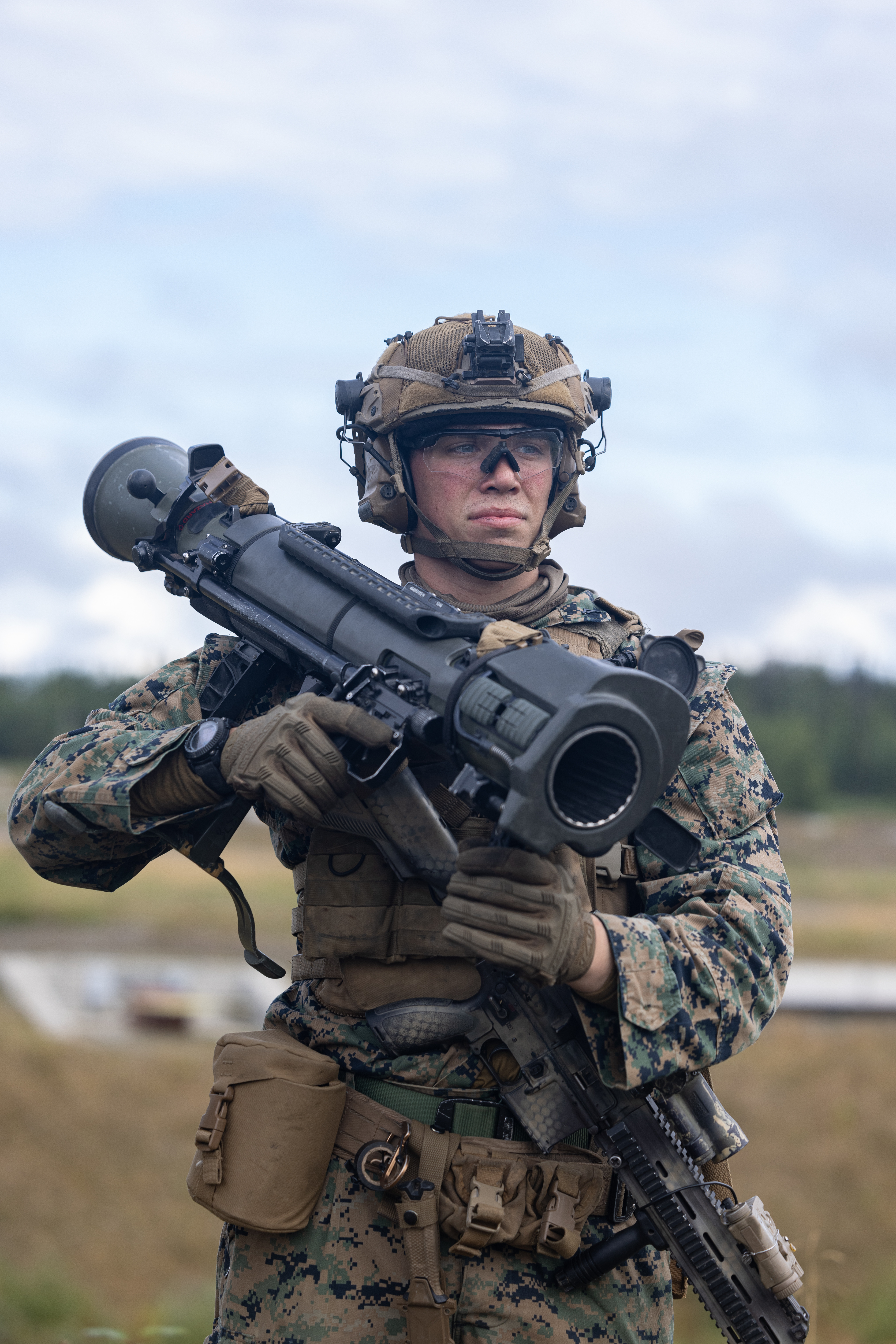
The future battlefield is characterized by trends that challenge traditional ground combat, including ubiquitous sensors, artificial intelligence and machine learning (AI/ML), expendable drones, a contested electromagnetic spectrum, and long-range precision weapons that increase both transparency and lethality. This environment reduces the time for maneuver and places forces at ever-increasing risk. While technology offers unprecedented advantages, it also introduces critical vulnerabilities. The solution is not merely technological superiority but the development of a human-centered warfighting approach, where well-trained Marines are the center of gravity. This emphasis on the human element ensures the GCE can thrive in a high-tech environment but also remain resilient and effective when those technological advantages are degraded or denied by an adversary or the myriad of the inherent frictions of warfare.

3. The Core Military Problem
The central military problem addressed by this concept is the need to develop GCE formations capable of dominating peer-level ground combat through 2040. These formations must be able to thrive in an environment defined by advanced technology while also being resilient enough to operate effectively when those technological advantages are degraded or denied by an adversary. The GCE must combine the specialized functions of the Marine Littoral Regiment (MLR) with the enduring requirement to field combat formations that can seize, hold, and defend key maritime terrain across the full spectrum of conflict.


The Five Pillars of Modernization

I. Human-Centered Warfighting
Emphasizes that Marines are the center of gravity. This pillar focuses on the training, education, and ethos required to succeed on a complex, high-tech battlefield.

II. Lethality
Aims to increase the GCE’s ability to deliver kinetic and non-kinetic effects in all domains by enhancing organic fire support, integrating Joint fires, and expanding sensing capabilities.

III. Endurance
Focuses on protecting the force through all-domain defense, resilient logistics, tactical deception, and signature management to ensure the GCE can sustain combat operations against a peer adversary.

IV. Decision Advantage
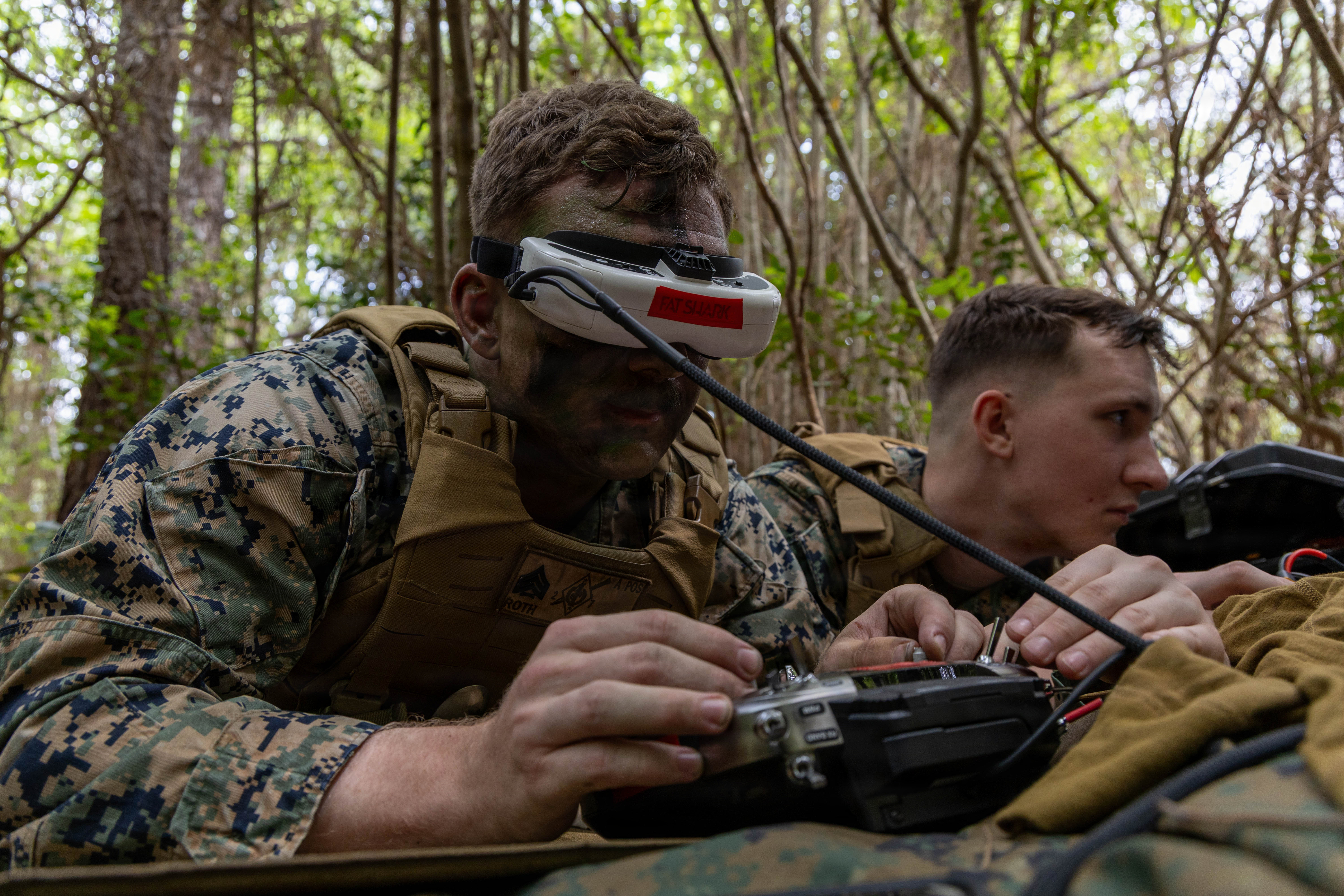
Seeks to achieve dominance through Human-Machine Teaming, employing AI and autonomous systems to accelerate the decision-making cycle and displace Marines from the most dangerous tasks.

V. Modularity
Focuses on developing scalable and adaptable force organizations, centered on the Marine Air-Ground Task Force (MAGTF), that can be tailored to specific missions and threats.


The Strategic Framework
1. The Central Idea: A Human-Centric, Technology-Enabled Force
The future GCE is envisioned as a modular, task-organized, multi-domain force that combines dispersed operations, lethality, information dominance, and resilient command and control to seize and defend contested littoral terrain. While enabled by advanced technology, this force is fundamentally human-centric, grounded in the willpower, discipline, and adaptability of the individual Marine. Technology enhances human judgment but never replaces it. The endeavor is to achieve decision and lethality dominance by integrating AI-augmented decision-making with Human Machine Teaming, allowing the GCE to consistently out-sense, out-think, and out-maneuver any adversary.

2. Supporting Ideas: The Five Pillars of Modernization
The central idea is supported by five interconnected pillars that guide the GCE’s transformation:

  • Human-Centered Warfighting: Emphasizes that Marines are the center of gravity. This pillar focuses on the training, education, and ethos required to succeed on a complex, high-tech battlefield.

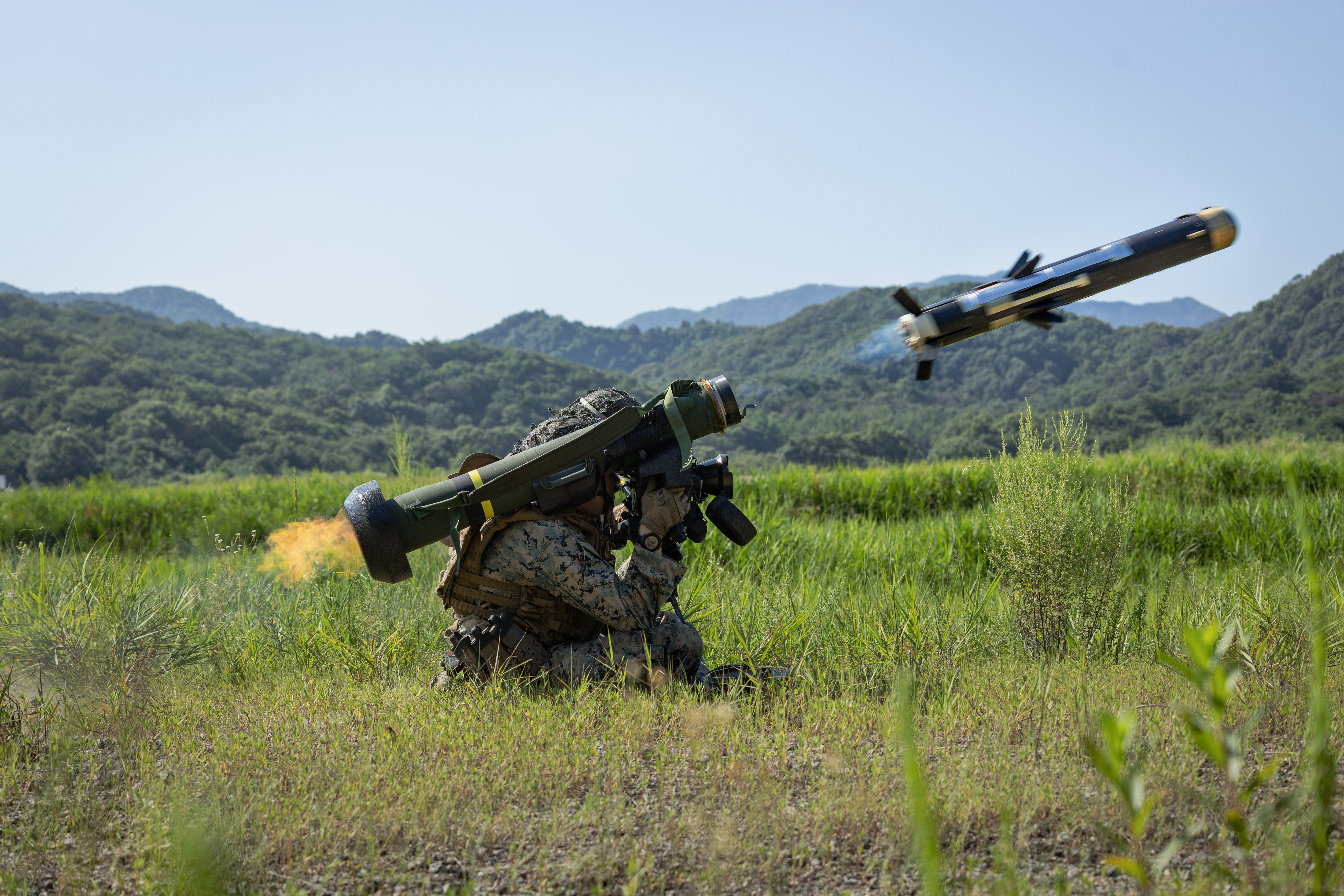
  • Lethality: Aims to increase the GCE’s ability to deliver kinetic and non-kinetic effects in all domains by enhancing organic fire support, integrating Joint fires, and expanding sensing capabilities.

  • Endurance: Focuses on protecting the force through all-domain defense, resilient logistics, tactical deception, and signature management to ensure the GCE can sustain combat operations against a peer adversary.

  • Decision Advantage: Seeks to achieve dominance through Human-Machine Teaming, employing AI and autonomous systems to accelerate the decision-making cycle and displace Marines from the most dangerous tasks.

  • Modularity: Focuses on developing scalable and adaptable force organizations, centered on the Marine Air-Ground Task Force (MAGTF), that can be tailored to specific missions and threats.
3. High-Priority Capability Requirements
To realize this vision, the framework prioritizes the development of several Concept Required Capabilities (CRCs). The highest-priority areas for investment and development are:

  • CRC 1: Force Structure: Manning, training, and equipping the force to operate in a high-tech environment while maintaining excellence in fundamental warfighting skills.

  • CRC 2: Multi-Domain Lethality and Targeting: Employing kinetic and non-kinetic fires, enabled by AI and a network of distributed sensors, to engage targets with speed and precision.

  • CRC 3: Tactical and Littoral Mobility: Ensuring GCE formations can maneuver across complex and contested terrain, including littoral environments, with agile and resilient platforms.

Other critical enablers include resilient Combined Joint All-Domain Command and Control (CJADC2) Integration (CRC 4), sustainable Logistics in Contested Environments (CRC 5), and layered Ground-Based Air Defense (GBAD) (CRC 6).


Implementation and Future Outlook

1. A Phased Approach to Modernization
The transformation of the GCE will occur across three overlapping periods:

  • Near-Term (2026-2030): This period focuses on refining and accelerating on going Force Design modernization efforts, addressing the immediate threat of drones, and setting conditions for future investments.

  • Mid-Term (2031-2035): Investments in AI and autonomous systems will mature, enhancing headquarters functions, streamlining logistics, and improving operational tempo. Drone/unmanned formations and layered counter-UAS capabilities become critical.

  • Long-Range (2036-2040): The GCE is transformed by AI-enabled command and control, widespread Human-Machine Teaming, and resilient, dispersed formations. It operates with increased combat power and survivability, providing the Joint Force with a decisive advantage on key littoral terrain.

2. Material Solution Priorities
Achieving the 2040 vision requires targeted investment in materiel solutions across the warfighting functions:

  • Fires and Maneuver: Long-range surface-to-surface fires, all-weather direct and indirect fires, advanced mobility platforms (Amphibious Combat Vehicle, Advanced Reconnaissance Vehicle), and layered GBAD down to the squad level.

  • Command, Control, Intelligence, and Information: Resilient and scalable command posts, multi-domain sensing networks, counter-reconnaissance capabilities, and integrated data systems to enable CJADC2.

  • Logistics: Unmanned ground, air, and surface platforms for expeditionary distribution, mobile power systems to support emerging technologies, and advanced medical capabilities.
3. Conclusion
The GCE 2040 framework outlines a comprehensive vision for effectively integrating with the Joint Force and winning on the future battlefield. It balances the imperative for technological innovation with the enduring nature of ground combat. Key risks remain, including overcoming legacy fielding patterns and ensuring the survivability of mobility platforms and C2 networks. However, by adhering to its design principles, the Marine Corps will forge a GCE that is more lethal, resilient, and adaptable.

The GCE of 2040 will be a human-centric, technologically-enabled force that leverages AI, robotics, and multi-domain fires to achieve decision dominance, deter adversaries, and decisively prevail in conflict.

“You may fly over a land forever, you may bomb it, atomize it, pulverize it clean of life. But if you desire to defend it, if you desire to protect it, if you desire to keep it for civilization, you must do this on the ground, the way the Roman legions did…in the mud” – T.R. Fehrenbach
 
“Unlike other organizations, military forces in peacetime must innovate and prepare for a war 1) that will occur at some indeterminate point in the future, 2) against an opponent who may not yet be determined, 3) in political conditions which one cannot accurately predict, and 4) in an arena of brutalist and violence which one cannot replicate.” – Williamson Murray: Innovation in the Interwar Period


Introduction
Imperative

Nations rarely predict future conflicts accurately, often clinging to outdated strategies shaped by previous wars, or simply learning the wrong lessons from adjacent conflicts. We acknowledge that we will neither perfectly anticipate the character or demands of the next fight, nor design the “right” future force from the start. Given these uncertainties, we will best serve the Nation by reinforcing our warfighting ethos and cultivating an ADAPTABLE and RESILIENT Ground Combat Element (GCE) designed for maximum mission flexibility, rapid force scaling, and sufficient organic combat power to win a wide range of littoral wars.

To realize a modernized force, the GCE requires a cohesive future concept of employment nested within the MAGTF construct, guiding critical development and resourcing decisions. Without a coherent, holistic framework to balance investment in future capabilities, with the ever-present requirement for capable and credible combat formations, we risk a future force that is over-optimized for specific functions while lacking the resilience, versatility, and lethality to succeed on the uncertain future battlefield.

This modernized force fights for control of land, specifically the landward portion of littoral terrain. Trends toward long-range warfare are accounted for, but the requirement to close distance over challenging terrain to accomplish missions in the land domain remains. Rugged, resilient, technologically-enabled, and fundamentally trained and equipped ground combat formations remain essential. We must realize a future where our combat formations achieve decision and lethality dominance through the combined power of AI-augmented decision-making allowing them to consistently out-sense, out-think, out-pace, and out-maneuver our enemies on key maritime terrain.


Purpose

Provide the Service’s foundation for developing, prioritizing, and balancing investments that shape the Marine Corps’ Ground Combat Element towards 2040 and serve as a benchmark for Program Objective Memorandum (POM) planning and programming.


Background and Context 2020-2026

Since 2020, the U.S. Marine Corps has transformed elements of its GCE under Force Design 2030 to counter peer-level A2/AD threats as part of Naval Expeditionary Forces. The centerpiece of this redesign is the Marine Littoral Regiment (MLR), a GCE formation optimized for persistent reconnaissance, sea denial, and Joint kill-web integration inside contested littorals. The future Third Marine Division is purpose-built, and littoral in nature with two MLRs that are being manned, trained, and equipped for expanded missions and crisis response. While MLRs fill a unique stand-in role, they do not replace the GCE’s enduring requirement to seize, hold, and defend key terrain. Accordingly, the GCE continues to balance the specialized functions of the MLR with the requirement to field task-organized, maritime-oriented ground forces organized, trained, and equipped for multi-domain operations. These forces are poised to fight for, from, and to retain key littoral terrain, and win across the competition continuum while preserving the Corps’ fundamental purpose: to close with and defeat the enemy in battle.

The inaugural FY25 GCE 2040 established our modernization vision through 2040. This FY26 update refines priorities based on emerging threats and technological advances. The FY26 update reinforces the GCE as the Joint Force’s only ground formation optimized to seize, hold, and defend critical maritime terrain, ensuring persistent combat superiority in contested littorals.

Marines have fought ashore in division strength and greater in every decade since Guadalcanal. No compelling evidence suggests changes to this pattern in the foreseeable future and analysis of the pacing threat points toward the future of competing Naval Expeditionary Forces. To meet these challenges requires balancing capability and capacity to execute the missions and tasks envisioned by Force Design and traditional Marine Corps missions.

The framework for this update is underpinned by Design Principles incorporated into the development of the Central and Supporting Ideas and Concept Required Capabilities consistent with the Service’s capabilities development processes.

GCE 2040 Design Principles:

  • Maneuver Warfare remains the Warfighting Philosophy of the Marine Corps

  • Technology enhances but never replaces human judgment

  • Optimize Force Design for GCE Lethality and survivability

  • Dispersion and resilience over centralization

  • Joint integration by design, not adaptation

While the document emphasizes the science of war, ground combat remains unpredictable and complex. Human will, resolve, and adaptability shape the outcomes of war; technology plays a necessary but supporting role. Unpredictability, complexity, terrain, and distance distinguish land warfare and close combat from domains constrained by physics or engineering. Therefore, the tasks and missions of the GCE endure, but the methods, equipment, tactics, techniques, and procedures continuously evolve with the character of conflict.

Scope

  • The planning horizon for this document is 2040.

  • This concept provides vignettes of future ground combat to inform GCE force development and modernization while simultaneously providing the entirety of the MAGTF with a vision of future ground combat and supporting requirements essential for the GCE.

  • This plan will offer explicit prioritization of GCE modernization efforts supporting the Service’s Planning, Programming, Budgeting, and Execution (PPBE) process.

Future Ground Combat Element

Based on the “First to Fight” concept, by 2035, the GCE must undertake several key developmental initiatives to maintain its competitive edge. These initiatives focus on adapting to a future operating environment characterized by persistent competition and rapid technological change. The plan is to accelerate the adoption of new operating methods and innovate across the force. The Ground Combat Element will conduct sea denial, contribute to sea control, and conduct amphibious operations to deny adversary freedom of action, while extending Joint Force commanders’ operational reach. Modernized GCE forward forces, optimized to operate in the littorals, will seize and hold key maritime terrain to deliver lethal effects, sense and shape the operating environment, and close kill webs in support of fleet maneuver and the Joint commander. Key development areas include enhancing littoral maneuver capabilities with advanced reconnaissance and a variety of small amphibious craft and conducting all-domain combined arms by integrating effects from cyberspace, space, and the electromagnetic spectrum. Furthermore, the GCE will prioritize adopting a “Hard to Find - Hard to Kill” approach through mobility and signature management, while also accelerating decision-making through the implementation of AI and data analytics. This transformation involves embracing new technology, including the aggressive integration of artificial intelligence, robotic and autonomous systems, and mastering the electromagnetic spectrum to ensure a decisive advantage in future conflicts. The near, mid-term, and long-range time epochs described below provide a general implementation roadmap and will expedite rapid innovation and adaptation. The 2036-2040 time epoch will continue to evolve in step with force design initiatives.


Near Term 2026-2030

The present epoch is characterized by successful and on-going Force Design modernization efforts. These efforts have increased the GCE’s ability to contribute to the maritime domain in a littoral campaign. Advances in artificial intelligence, networked sensors, long-range precision weapons, and increasingly autonomous robotics are expanding both transparency and lethality in the land domain, challenging traditional attributes of speed and tempo for maneuver.

The prevalence of autonomous systems in general and lethal drones in particular are transforming tactics and presenting new challenges, especially to concentrated forces in open terrain. The proliferation of sensors, especially overhead, increases battlefield transparency while reducing time and opportunity to exploit gaps. Therefore, to set the conditions for the optimal force of the future, the GCE must accelerate its investments and fielding of capabilities that enhance lethality, survivability, command and control, AI, and unmanned systems in response to evolving technology and resource availability.


Mid Term 2031-2035

Investments in artificial intelligence enhance all aspects of GCE operations by optimizing combat power, streamlining headquarters functions, and accelerating decision-making across warfighting activities. Autonomous systems expand maneuver options through improved bridging and breaching capabilities, while reinforcing the resilience and adaptability of logistical lines of communication. Continued investment in all-weather reconnaissance and autonomous systems significantly improves information and sensing advantage to drive operational tempo.

Robotics and autonomous system integration remains critical during this epoch. Drone formations, scaled to expand a commander’s ability to execute essential fire support tasks, complement rocket and cannon artillery. The widespread use of drones underscores the need for effective organic protective measures across the GCE, down to the squad level. The evolving drone threat presents the most significant risk to ground maneuver, requiring layered active and passive counter-UAS capabilities to retain the initiative. Survivability must be addressed by comprehensively encompassing improved training, updated doctrine, and technological advancements.

Technical upgrades to regimental and division headquarters to better integrate CJADC2 are improving interoperability with allies, partners, and the Naval and Joint Force. Regimental headquarters ashore now have the capability and authorities to execute kill webs by leveraging Joint and allied sensors, enabling kinetic and non-kinetic fires for lethal and non-lethal effects. Extending this capability to the division level in conflict will be critical to increasing operational tempo in the future. At echelons below Regiments, ubiquitous, small-form factor, C2 systems and processes support dispersed operations.


Long Range: 2036-2040

AI-enabled, edge-computing, CJADC2 systems are transforming the GCE by enhancing its ability to sense, make sense, communicate, and maneuver with tempo. These advancements enable distributed operations across units, granting commanders a sustained decision advantage and agility to position forces where they are most needed on the battlefield. Improved bandwidth, information management, and battle rhythm discipline allow staffs to anticipate and plan further ahead, while advanced sensor systems provide smaller, more capable devices that expand coverage and deepen situational awareness.

Broad lethal and non-lethal authorities delegated to O-6 commanders enable them to integrate effects across domains. Prioritized investments provide precise, long-range fires supported by improved command and control and reliable non-kinetic options. Robotics and autonomous systems augment, and in certain instances replace, maneuver elements, complicating adversary decision-making and strengthening logistical resilience. Modernized GCE formations operate with increased combat power while dispersing the number of Marines present on the battlefield to increase survivability and operational resilience.

The GCE’s adaptability rests on its increasingly resilient infantry formations—disciplined, versatile, and well-trained units that remain the foundation of the combat force.

These formations enable rapid transitions between sensing, decision, and action across the battlespace. Concurrently, training and education evolve alongside technological progress, preparing Marines for future conflict while safeguarding core warfighting skills to guarantee a decisive advantage even when technology is limited or denied, thus providing the Joint Force a combat credible formation on key maritime terrain.

Military Problem

The Marine Corps must develop GCE formations, centered on the Marine Division and its subordinate elements, capable of dominating peer-level ground combat through 2040, where ubiquitous advanced technologies (AI-enabled decision systems, autonomous platforms, networked fires, directed-energy weapons, pervasive ISR, and cyber/EW dominance) will fundamentally alter tempo, lethality, and dispersion. Yet, these same technologies introduce single-point vulnerabilities to ground combat operations and risk to the Marines who conduct them: electromagnetic spectrum denial, cyber intrusion, supply-chain sabotage, or kinetic destruction of enablers can instantaneously degrade or eliminate high-tech advantages.


Central Idea

The future Marine Corps GCE is a modular, task-organized, multi-domain, maneuver warfare force that combine dispersed operations, information and data dominance, integrated precision and massed fires, resilient command and control at echelon, and is capable of Joint and Combined integration to shape, seize, hold, and defend key contested littoral terrain against peer and near-peer adversaries. They will be trained organized and equipped to conduct stand-in-force operations, conduct crisis response, project power seaward and landward. Enabled by advanced technology but grounded in Marine willpower, discipline, endurance, and ethos, Marine Corps ground combat elements are agile, human-centric and aim to create conditions for strategic success, deter aggression, and decisively prevail in future conflicts.

Supporting Ideas

Supporting Idea 1: Human-Centered Warfighting
Marines are our center of gravity. The purpose of this supporting idea is to emphasize the primarily non-materiel advancements required to enable Marines, from riflemen to commander, to succeed on the future battlefield. Central to GCE 2040 Design Principles, it ensures systems enhance human judgement, optimize human performance with and without technology, and increase the ability to operate with the Joint Force, Allies, and Partners.

Access to key maritime terrain will not be automatically granted by allies and partners. Instead, integration, achieved through security cooperation, security force assistance, and exercise events, is necessary to strengthen partner military capabilities, build interoperability with the GCE, and maintain persistent presence and regional maritime domain awareness. By operating alongside partnered forces, the GCE can build trust over time, which is essential for effective cooperation during crisis and conflict. Trust is a cultivated asset that
cannot be surged; it requires consistent and sustained effort through campaigning, and its development during periods of competition yields significant benefits during times of crisis.


Supporting Idea 2: Lethality: Fires and Effects in All Domains
We will increase GCE lethality through future capabilities that enable essential fire support tasks in support of the MAGTF and fleet maneuver. Key elements of this supporting idea:

  1. Enhance direct and indirect fire systems organic to the GCE

  2. Coordinate and integrate kinetic and non-kinetic fires, lethal and non-lethal effects, and employment authorities from the CE, ACE, and Joint Force

  3. Expand sensing capabilities at echelon and under all conditions (air, ground, maritime) to locate and engage targets.

  4. Targeting and Employment authorities planned, delegated, rehearsed, and executed at the O-6 level

  5. Synchronization with Allies and Partners to include closing Joint and combined kill webs

  6. Conduct fires in support of sea denial and sea control operations.


Supporting Idea 3: Endurance: Protection, Resilience, and Sustainment
Establishing forward presence within range of adversary sensors and weapon systems during competition provides an advantage that can be leveraged by the joint force during crisis and conflict. By deploying distributed, low-signature, expeditionary forces in close proximity to an adversary, the GCE can disrupt the enemy’s targeting cycle and enable sustained operations. This approach also reduces the need for high-signature, vulnerable fixed bases, allowing for more flexible and resilient operations.

To protect GCE critical requirements that are vulnerable to peer adversaries on the future battlefield we require solutions for all-domain protection from kinetic and non-kinetic attack, across all echelons of the GCE, while strengthening its connection to the Logistics Combat Element (LCE) to sustain combat operations. Inherent to resilience and protection are expanding capabilities to conduct tactical deception, improve camouflage, and conduct all-domain signature management.


Supporting Idea 4: Decision Advantage: Achieving Decision and Lethality Dominance through Human-Machine Teaming
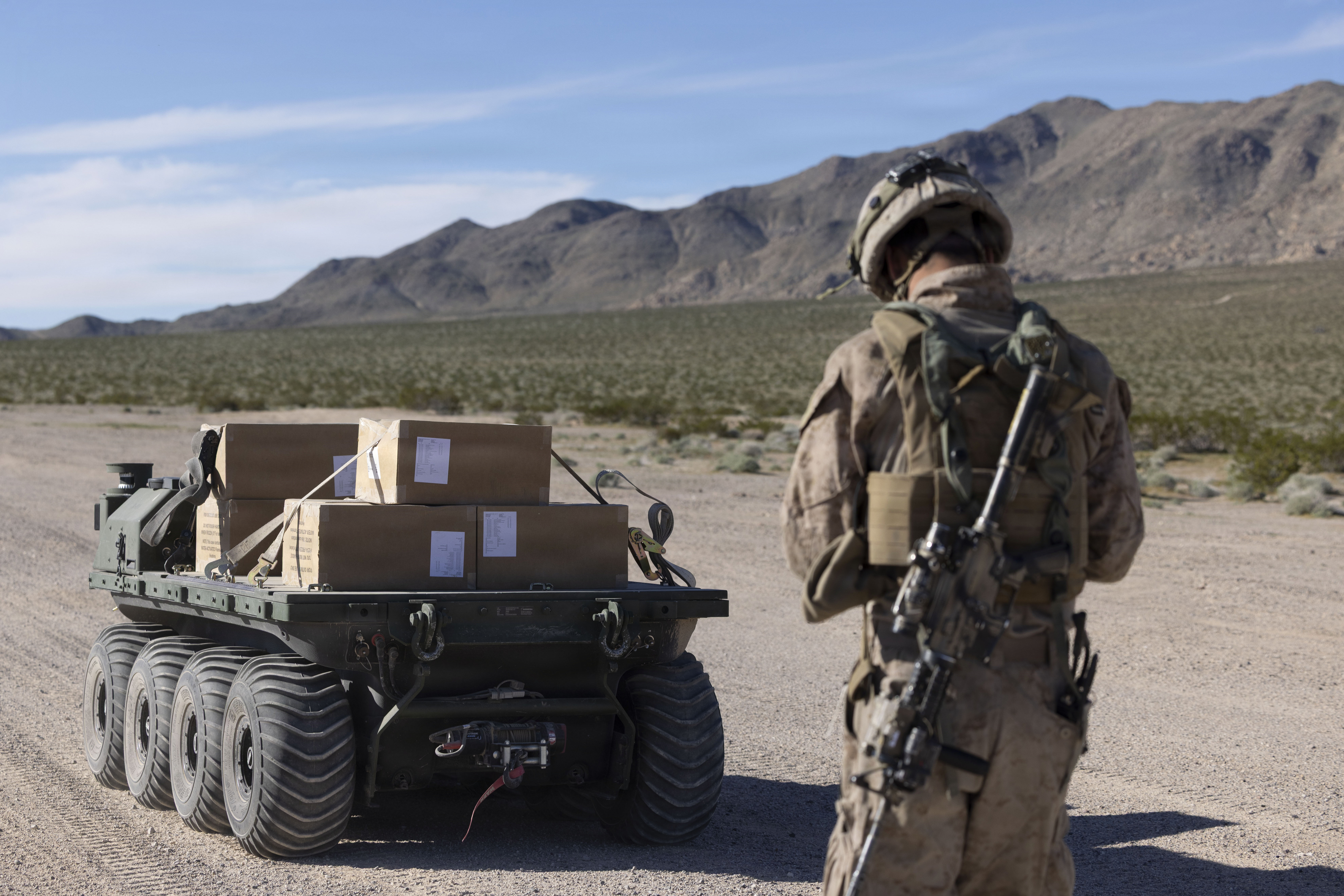
We will realize a future where our combat formations achieve decision and lethality dominance through the combined power of AI-augmented decision-making and Human-Machine Teaming. This integrated team allows our forces to consistently out-sense, out-think, out-pace, and out-maneuver our enemies. We will employ robotic platforms with scalable autonomy to displace Marines from the most dangerous tasks, consciously accepting risk with hardware rather than humans while providing depth and mass to intelligence, fires, and maneuver tasks. In the littorals, this approach is essential for enabling dispersed forces to persist under constant enemy observation and threat. Ultimately, achieving this level of Human-Machine Teaming will expand our operational reach and tempo, imposing complex dilemmas to disrupt the enemy’s cohesion and force them to react on our terms.


Supporting Idea 5: Modularity: Force Organization
We will develop GCE formations with the depth, modularity, and scalability necessary to generate forces for future combat. Central to this effort is the Marine Air-Ground Task Force (MAGTF) and its inherent ability to task organize and enable commanders to tailor force composition to mission requirements, operating environments, and threat levels. As robotic systems become more viable, autonomous mass will increasingly replace human mass to absorb “first contact risk” inside the adversary’s weapons engagement zone. The GCE will modernize as a system with combinations of units ranging from robot assisted to fully autonomous units based on mission driven technology development. The development of MLR headquarters brought exquisite command and control and information capabilities to the MLR headquarters. These capabilities must be scaled to the Division Headquarters and incorporated across O-6 headquarters in the GCE. Further, the modernization of capabilities within independent battalions must continue at pace, particularly for units that will rapidly respond in crisis across complex operating environments.

Concept Required Capabilities (CRCs)

CRC 1. Force Structure: Manning, Training, Educating, and Equipping to Employ: 
The GCE requires the ability to man formations trained and educated to task organize and operate in high-tech, all-domain combat while maintaining fundamental warfighting excellence when technology is degraded or denied. Training will prepare Marines for the violence and danger of combat while preparing units to operate in complex distributed operating environments.

CRC 2. Multi-Domain Lethality and Targeting:
The GCE requires the ability to employ kinetic and non-kinetic fires to achieve lethal and non-lethal effects by leveraging artificial intelligence for automated target recognition, prioritization, and fire allocation. This is achieved across distributed sensors at echelon and multiple domains to engage adversary formations responsively, precisely, and with minimal degradation.

“There are two dangers with respect to equipment: the overreliance on technology and the failure to make the most of technological capabilities. Technology can enhance the ways and means of war by improving humanity’s ability to wage it, but technology cannot and should not attempt to eliminate humanity from the process of waging war.” – MCDP 1


CRC 3. Tactical and Littoral Mobility:
The GCE requires the ability to maneuver across complex and contested terrain, including maritime portions of littoral environments, using resilient and adaptable mobility platforms. Formations must combine tactical agility, endurance on land and in the littorals, engineering, and logistical integration to sustain maneuver advantage under persistent threat.

CRC 4. Combined, Joint All-Domain Operations and Joint All-Domain Command and Control (CJADC2) Integration:
The GCE requires the ability to integrate and synchronize command and control across all physical domains (land, maritime, air, and space) and cyberspace in real time under contested electromagnetic conditions.

CRC 5. Logistics in Contested Environments and Expeditionary Power:
The GCE requires the ability to execute logistics functions and distribute supplies through resilient, distributed networks employing autonomy, artificial intelligence, and redundant stocks, while reducing energy demand in contested maritime environments. Advances in expeditionary energy are essential to power emerging technologies. The GCE must be capable of generating, storing, and distributing portable, resilient power to sustain forward-deployed forces during prolonged operations in austere conditions.

CRC 6. Ground Based Air Defense:
The GCE requires the ability to detect, identify, track, and defeat small unmanned aerial systems, rotary-wing aircraft, and low-flying fixed-wing threats close-in and out to extended ranges to protect maneuver units from aerial reconnaissance and precision attack.

CRC 7. Robotics, Autonomy, and Human–Machine Teaming:
The GCE requires the ability to employ autonomous systems across all warfighting functions to generate asymmetric mass, extend operational reach, and increase tempo.

CRC 8. Distributed Processing and Data Resilience:
The GCE requires the ability to conduct decentralized data processing and analytics at the tactical edge using ruggedized computing nodes. These capabilities support real-time decision-making and resilient kill webs in communications-degraded environments to maintain decision advantage at echelon. The ruggedized compute nodes must be Size, Weight, and Power (SWaP)-optimized processing nodes that are man-portable or vehicle-integrated. These nodes must be capable of running containerized AI/ML algorithms and data fusion applications locally. The software architecture must be modular, allowing for over-the-air or decentralized updates to AI models even in a denied, disrupted, intermittent, or limited state.

CRC 9. Electromagnetic, Cyber, and Space Resilience:
The GCE requires the ability to detect, disrupt, and deny adversary electronic warfare while protecting friendly spectrum-dependent assets to ensure coordination and operational continuity under cyber, space, and electronic attack.

CRC 10. Deception and Camouflage/Signature Management:
The GCE requires the ability to plan, coordinate, and execute tactical deception, camouflage, and all-domain signature management to deny adversary sensing, disrupt adversary decision-making, and protect friendly forces from being targeted.

Material Solution Prioritization

This section is a prioritized list of material solutions necessary to realize the future operating concepts depicted in this document. Capabilities are categorized as 1) Fires and Maneuver 2) Command and Control, Intelligence, and Information 3) Logistics.


Fires and Maneuver
This section includes the Fires, Maneuver, and Protection warfighting functions. These capabilities generate kinetic fires and lethal effects, provide mobility, protect the force from overhead threats, and provide camouflage for forces. Related Concept Requirement Capabilities: Lethality, Mobility, Deception, GBAD, Camouflage, and Signature Management.

  1. All weather direct and indirect infantry battalion and regimental fires

  2. Long/medium range surface/terrestrial fires (cannon artillery and surface-surface rocket artillery) including long range anti-ship missiles, small unmanned aerial systems , and modernized electronic warfare ground and Littoral Mobility, including small craft, such as patrol boats, and coastal vessels Organic Precision Fires (light/medium)

  3. Ground Based Air Defense at echelon to squad level

  4. Breaching (stand-off counter mine)

  5. Bridging

  6. Camouflage/Signature Management

  7. Integrated air and missile defense at echelon


Command and Control, Intelligence, and Information
This section contributes to the Command and Control, Intelligence, and Information warfighting functions. These capabilities provide systems, waveforms, transport mechanisms, non-kinetic fires and non-lethal effects, and sensors. Related Concept Required Capabilities: Robotics, Autonomy, AI, Human-Machine Teaming; CJADC2 Integration; Deception, Camouflage, and Signature Management; Distributed Processing and Data Resilience, Electromagnetic and Cyber Resilience; Force Structure; and Multi-Domain Lethality and Targeting.

  1. Operational Command Post at echelon

  2. Cross Domain Solutions-multi-mode, multi-waveform, integrated data and information transfer

  3. Reconnaissance with manned/unmanned teaming

  4. Terrestrial, air, and surface mesh sensing

  5. Counter Reconnaissance (physical, spectrum, and cyber)

  6. Deception

  7. Mission Partner Environment / Sensitive but Unclassified equipment

  8. Self-monitoring


Logistics
This section contributes to the Logistics Warfighting Function. Related Concept Required Capabilities: Force Structure and Logistics in Contested Environments.

  1. Manned/unmanned (ground/air/surface) expeditionary distribution

  2. Forward/maritime positioned capabilities

  3. Advanced medical capabilities

  4. Family of mobile power systems

  5. Expeditionary fuel/water storage and distribution

  6. Family of field feeding systems

  7. Additive manufacturing

Conclusion

The GCE 2040 framework outlines a comprehensive vision for ensuring the Marine Corps’ ground combat element can dominate the future battlefield. It puts forth a dual-focused strategy that balances the imperative for technological advancement—through AI, autonomous systems, and resilient command and control—with the enduring principle that the individual Marine remains the ultimate center of gravity. This framework provides the essential roadmap for developing a force that is more lethal, adaptable, and resilient. By adhering to these principles, the GCE will be postured to achieve decision dominance, deter adversaries, and decisively win in the contested littoral environments of tomorrow.

References

Doctrine and Concepts

  • MCWL FOE 2035 (TS/SCI)

  • GCE 2040 (FY25) (U), June 25

  • Joint Warfighting Concept 3.0 (TS/SCI)

  • First to Fight: A Capstone Operating Concept (S) TBD

  • MCWL: How We Fight 2025 (S//NF), 3 Jul 25

  • Concept for Stand In Forces (SIF) (U), 2021

  • Expeditionary Advanced Base Operations (U), May 2023

  • Littoral Operations in a Contested Environment (U), Sep 17

  • Distributed Maritime Operations (U) & (S)

  • Tri-Service Strategy: Advantage at Sea (U), Dec 20

  • MCWP 3-31 - Marine Air-Ground Task Force Fires and Effects (U)

  • A Functional Concept for Maritime Reconnaissance and Counter-Reconnaissance (U)

  • Functional Concept for MAGTF Fires (U), 1 Jul 25

  • Joint Doctrine Note 1-25

  • Army Techniques Publication (ATP) 7-100.3: Chinese Tactics

Strategic and Service Guidance

  • CD&IO 5401.2 Standard Operating Procedures for Concept Generation and Development (U)

  • 39th Commandants Planning Guidance (U), Aug 24

  • Interim National Defense Strategy Guidance(S//NF), Mar 25

  • National Defense Strategy (S//NF), 2026

  • National Security Strategy (U), 2026

  • Force Design 2030 and associated updates (U), 2020-24

  • MCTOG Threat C 2024

  • U.S. Department of Defense, Annual Report to Congress: Military and Security Developments Involving the People’s Republic of China 2016

  • U.S. Department of Defense, Annual Report to Congress: Military and Security Developments Involving the People’s Republic of China 2020

  • U.S. Department of Defense, Annual Report to Congress: Military and Security Developments Involving the People’s Republic of China 2024

  • Office of Naval Intelligence, “PLA Navy: New Capabilities and Missions”

Academic References

  • Williamson R. Murray and Allan R. Millett, eds., Military Innovation in the Interwar Period (Cambridge: Cambridge University Press, 1998), 301.

  • Recommendations in this document focus on GCE efforts as outlined in Force Design 2030 Annual Update (Oct 2025).

  • China Maritime Report No. 15: The New Chinese Marine Corps: A “Strategic Dagger” in a Cross-Strait Invasion (Newport, RI: China Maritime Studies Institute, U.S. Naval War College, 2021), https://digital-commons.usnwc.edu/cmsi-maritime-reports/15.

  • Navy Force Structure and Shipbuilding Plans: Background and Issues for Congress, RL33153 (Washington, DC: Congressional Research Service, 2025), https://www.congress.gov/crs_external_products/RL/PDF/RL33153/RL33153.277.pdf.

  • Conor M. Kennedy, “New Wine into New Wineskins: The Evolving Role of the PLA Navy Marine Corps in Amphibious Warfare and Other Mission Areas,” Jamestown Foundation, November 18, 2021, https://jamestown.org/program/new-wine-into-new-wineskins-the-evolving-role-of-the-pla-navy-marine-corps-in-amphibious-warfare-and-other-mission-areas/.

  • Tetsuo Kotani, “The PLA Navy Marine Corps and Its Role in Amphibious Operations,” NIDS Commentary 238 (Tokyo: National Institute for Defense Studies, 2025), https://www.nids.mod.go.jp/english/publication/commentary/pdf/commentary238e.pdf.

  • Conor Kennedy, China Maritime Report No. 15: The New Chinese Marine Corps: A “Strategic Dagger” in a Cross-Strait Invasion (Newport, RI: China Maritime Studies Institute, U.S. Naval War College, 2021), https://digital-commons.usnwc.edu/cmsi-maritime-reports/15.

  • Dennis J. Blasko and Roderick Lee, “The PLA Navy Marine Corps: Evolution, Expansion, and Expeditionary Ambitions,” Journal of Advanced Military Studies 15, no. 2 (Fall 2024): https://www.usmcu.edu/Portals/218/JAMS_Fall%202024_15_2_web.pdf.

  • Vikram Mittal, Complex Terrain: Megacities and the Changing Face of Ground Combat (Quantico, VA: Marine Corps University Press, 2023), https://www.usmcu.edu/Portals/218/ComplexTerrain_web.pdf.

  • Andrew S. Erickson and Austin M. Strange, No Substitute for Experience: Chinese Antipiracy Operations in the Gulf of Aden, CMSI Red Books (Newport, RI: Naval War College, 2015).

  • “Marine Corps Conducts Cross-Theater Training in Desert and Jungle Environments,” PLA Daily, August 12, 2014.

  • State Council Information Office, China’s National Defense in the New Era (Beijing: SCIO, 2019).

  • Center for Strategic and International Studies (CSIS), “China’s Modernizing Military” (Washington, DC: CSIS, 2021).

  • RAND Corporation, An Interactive Look at the U.S.-China Military Scorecard, 2022 update (Santa Monica, CA: RAND, 2022).

  • PLA Academy of Military Science, “Joint Operations in the Information Age,” trans. open-source (Beijing: AMS, 2024).

  • CSIS China Power Project, “Amphibious Warfare and the PLANMC” (Washington, DC: CSIS, 2024).

  • International Institute for Strategic Studies (IISS), The Military Balance 2025 (London: IISS, 2025), chap. 6.

  • RAND Corporation, China’s Global Basing Ambitions (Santa Monica, CA: RAND, 2023).